Podcast
Vietnamese people in the Czech Republic: migration, family and two cultures
The history and present of the Vietnamese minority, upbringing, language and “Czech grannies”
1 h 30 min
Also listen on
TAMly podcast s odborníky
In short
- The episode goes back to the beginnings of Vietnamese migration to Czechoslovakia and shows how political, economic and family circumstances shaped the lives of the first generation and their children.
- The Vietnamese community is not one homogeneous group. The experiences of individual families can differ greatly, so it makes little sense to judge “the Vietnamese family” by a single template.
- The conversation explores Czech and Vietnamese culture, traditionalism and economic integration. It also looks at the challenges Vietnamese people in Czechia face and what integration looks like in practice.
- Two languages: the episode covers children’s bilingual development, language barriers and education, and asks whether the goal is language integration or full assimilation. Part of the listed literature relates to language and bilingualism.
- “Czech grannies” played an important role in the lives of many Vietnamese children. They helped with Czech and with getting to know Czech surroundings, and were a source of closeness, safety and care at a time when parents spent most of their time working.
- Families and institutions: the episode looks at the Vietnamese community from the perspective of the Czech system, especially schools, and asks why misunderstandings arise between parents, children and institutions. For parents and children alike, it can be useful to hear that they can be resolved.
- The closing part asks what good families look like. When a misunderstanding arises with a school or an office, you can ask for an interpreter or an intercultural worker; if tension in the family weighs on you for a long time, the Opatruj se map can help you find support.
How has life for the Vietnamese minority in Czechia changed across generations? Why do misunderstandings sometimes arise between parents, children, schools and Czech institutions? And what can help us better understand life between two cultures?
In the first episode of the series “TAMly podcast with experts”, Dan Le talks with sociologist, Vietnamese studies specialist and intercultural mediator Jiří Kocourek.
What it covers
How Vietnamese communities came to be
The conversation goes back to the beginnings of Vietnamese migration to Czechoslovakia and how political, economic and family circumstances shaped the lives of the first generation and their children.
It also explains why the Vietnamese community cannot be seen as one homogeneous group and which trends and characteristics appear across communities.
Culture, tradition and integration
The next part explores Czech and Vietnamese culture, traditionalism and economic integration. The episode also looks at the challenges Vietnamese people in Czechia face and what integration looks like in practice.
Two languages and education
The conversation pauses on children’s bilingual development, language barriers and education. It also asks whether the goal is language integration or full assimilation.
Part of the literature listed below relates to language and bilingualism.
Upbringing and “Czech grannies”
The episode looks at upbringing in Vietnamese families and the phenomenon of “Czech grannies”, who played an important role in the lives of many Vietnamese children. They helped not only with learning Czech and getting to know Czech surroundings, but were also a source of closeness, safety and care at a time when parents spent most of their time working.
Families and Czech institutions
The closing part looks at the Vietnamese community from the perspective of the Czech system and asks what good families look like. Since 2017 the guest has focused mainly on communication between Vietnamese families and Czech institutions, especially schools.
For parents and children alike, it can be useful to hear why misunderstandings arise – and that they can be resolved.
Did you know? Facts behind the episode
Click a question to play exactly that moment of the conversation.
Earlier scholarship disagreed about how to classify the Vietic languages (Kirby, 2011; Phan, 2012). One of the most recent classifications, proposed by Sidwell and Alves (2021), places Mường and Nguồn in the same group of Vietic – specifically East Vietic – languages in the Viet-Muong category, together with Vietnamese.
Kirby (2011); Phan (2012); Sidwell & Alves (2021)
Bialystok (2008) reports that bilingual children have a smaller vocabulary in each of their languages than monolingual children in theirs. Bilingual children also retrieve words more slowly (lexical access), and in memory tasks that rely mainly on free verbal recall (such as remembering lists of words) bilinguals perform worse than monolinguals.
Bialystok (2008)
According to Souralová (2021), Vietnamese mothers and fathers saw their role mainly as providing for the family financially and investing in their children’s education, which they understood as the highest expression of parental love and sacrifice. For these parents, earning money mattered more than being socially and emotionally present in their children’s everyday lives.
Souralová (2021)
Czech nannies – often called grannies or aunties in the community – play a crucial, formative and socialising role in the lives of Vietnamese children growing up in Czechia. First-generation parents often work long hours in shops and markets to secure their families’ financial future, so they entrust everyday childcare to Czech nannies.
According to Souralová (2020), Czech carers fulfil four main roles:
- Language socialisation and speech development
- Passing on an “informal curriculum” and Czech culture
- Home schooling and help with homework
- Mediators and contact with the school
Souralová (2020)
Tips for you
You can answer the questions anonymously. Answers appear once the TAMly team has checked them.
Language is also a bridge to family. If you can, make room for both languages at home – for example by reading or telling stories together.
When a misunderstanding arises with a school or an office, you can ask for an interpreter or an intercultural worker. It is not a failure but fair communication.
Ask your parents and grandparents about their story – without pressure and at their pace. Understanding the circumstances in which they came can make conversations between generations easier.
Do not judge “the Vietnamese family” by a single template. Every family has its own story, possibilities and values.
If tension in the family weighs on you for a long time, you can turn to a family counselling service or another professional. The Opatruj se map can help you find your way.
Sharing guidelines
- Anonymously – no names or personal details.
- With respect – no insults, hate or attacks on others.
- Speak for yourself – your own experience and views.
- We protect privacy – do not share sensitive details about other people.
Sources and further reading
- Souralová, A. (2020). Vietnamese Parents and Czech Nannies: Second-Generation Immigrant Children and their Educators. Journal of Education Culture and Society, 5(1), 320–333. doi.org ↗
- Berry, J. W. (1997). Immigration, acculturation, and adaptation. Applied Psychology, 46(1), 5–34. doi.org ↗
- Souralová, A. (2015). New perspectives on mutual dependency in care-giving. Ashgate. doi.org ↗
- Souralová, A. (2015). ‘That’s the lady I call grandma!’ Czech Sociological Review, 51(5), 815–844. doi.org ↗
- Pham, T. H., & Kraus, F. (2024). ‘Banana’, Vietnamese or Czech? The identity struggles of second-generation Vietnamese in the Czech Republic. Diaspora Studies, 17(1), 85–104. doi.org ↗
- Formánková, L., & Lopatková, M. (2022). “Confessions of the Vietnamese” Facebook page: The intergenerational conflict of young Vietnamese migrants in the online space in the Czech Republic. Český lid, 109(1), 83–104. doi.org ↗
- Bialystok, E. (2008). Bilingualism: The good, the bad, and the indifferent. Bilingualism: Language and Cognition, 12(1), 3–11. doi.org ↗
- Kirby, J. P. (2011). Vietnamese (Hanoi Vietnamese). Journal of the International Phonetic Association, 41(3), 381–392. doi.org ↗
- Phan, J. (2012). Mường is not a subgroup: Phonological evidence for a paraphyletic taxon in the Viet-Muong sub-family. Mon-Khmer Studies, 40, 1–18.
- Sidwell, P., & Alves, M. (2021). The Vietic languages: a phylogenetic analysis. Journal of Language Relationship, 19(3–4), 166–194. doi.org ↗
- Souralová, A. (2014). Vietnamese Parents and Czech Nannies: Second-Generation Immigrant Children and their Educators. Journal of Education Culture and Society, 5(1), 320–333. doi.org ↗
- Souralová, A. (2021). “My parents did everything for us but nothing with us”: Parenting and mothering in Vietnamese immigrant families in the Czech Republic. Asian and Pacific Migration Journal, 30(1), 39–59. doi.org ↗
- Opatruj se – mapa péče o duševní zdraví. opatruj.se www.opatruj.se ↗
How did you like this content?
★ 4.0 of 5 · 1 rating
Read next
Czech grannies and Vietnamese grandchildren
Linh Chi
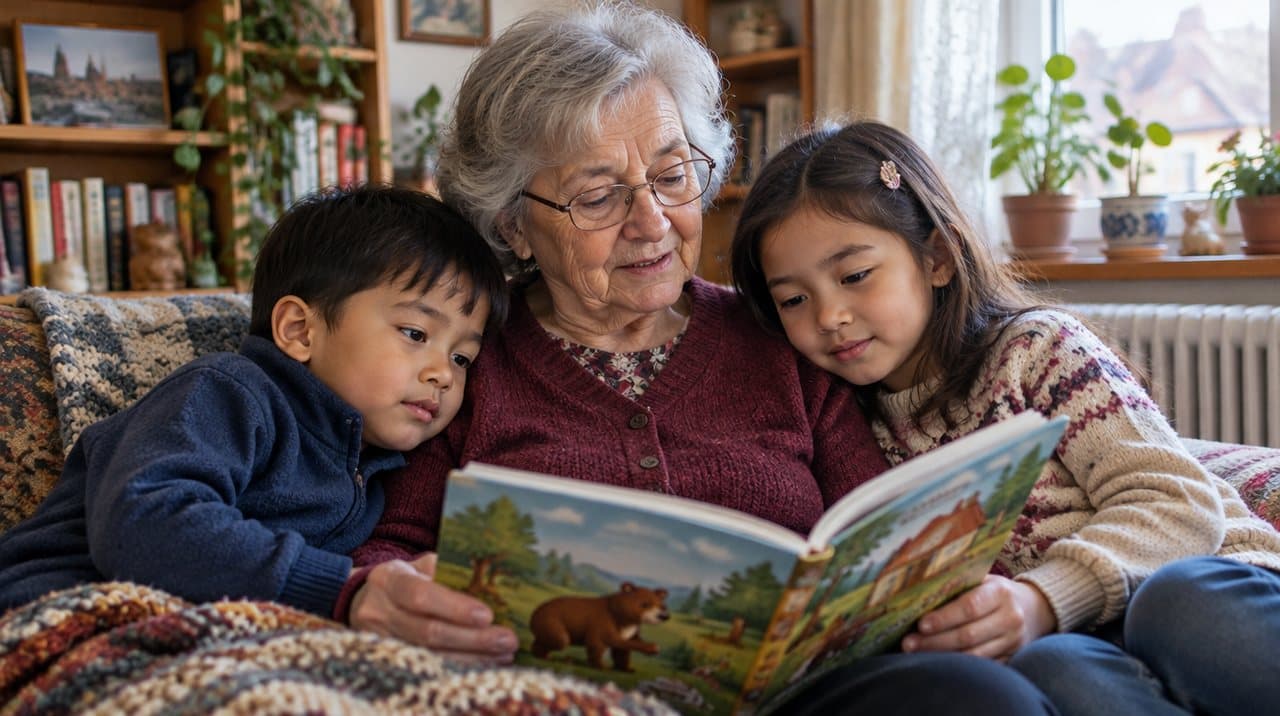
“My favourite dish is my granny’s goulash… my Czech granny’s.” An article about the childhood of the second generation of Vietnamese in Czechia, where a Czech family of the heart grows up alongside the Vietnamese family by blood.

Mixed marriages in the Vietnamese community
Dan Le, Veronika Ngo, Dana Haranzová
Veronika Ngo and Dana Haranzová share personal stories about growing up between two cultures, searching for identity and feeling accepted.
Mental health: success, family and wellbeing
Dan Le, Dominika Čechová, M. A.
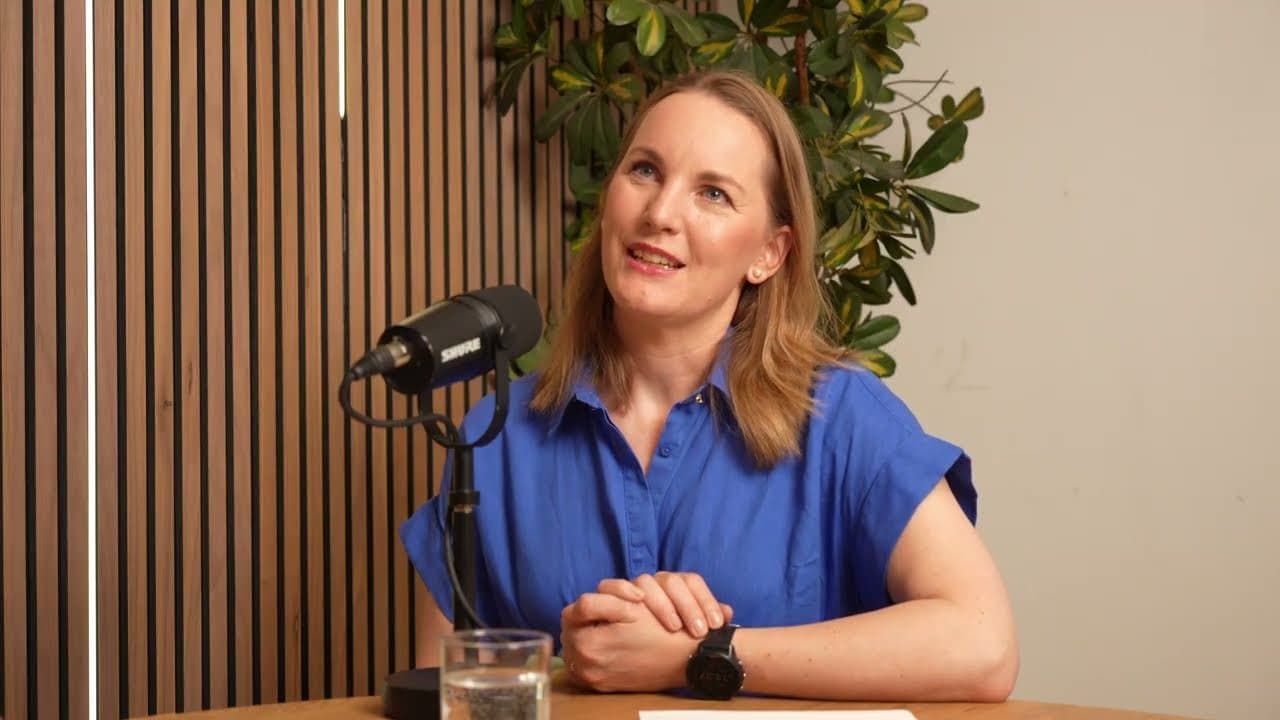
A conversation with psychotherapist Dominika Čechová about what shapes us: childhood, emotions, relationships, pressure to perform and psychotherapy.