
Panel discussion recording
ADHD in adults
Myths, assessment, women with ADHD and practical tools for every day
2 h 30 min · Recorded at a panel discussion, House of National Minorities (Dům národnostních menšin), Prague
In short
- ADHD is not laziness or the result of upbringing. The panel unpacks the most common myths – for example that it only affects boys or that “everyone has ADHD these days” – and explains what ADHD really is.
- The introduction mentions a review suggesting that ADHD is underdiagnosed in Asian American children and adolescents; prejudice, the “model minority” myth and stigma around mental health all play a part. A separate chapter covers ADHD and life between two worlds.
- Signs: the panel covers how a person might recognise that they could have ADHD, what emotional dysregulation is and how the ADHD brain works. Hyperfocus and its advantages are discussed too.
- Assessment: the guests describe how it works and ask whether a person needs an official diagnosis at all. Signs you recognise in yourself are a reason to talk to a professional, such as a psychiatrist or clinical psychologist – not a finished diagnosis.
- Women with ADHD: assessment tends to be more complicated for women. The panel also discusses how ADHD connects with hormones and the menstrual cycle, motherhood and other life changes.
- Everyday life: the practical part offers tips on tidying, handling chaos and simplifying your surroundings. Fewer things in sight, fixed places for items you often look for and visible reminders can help.
- Work and study: the panel looks at ADHD in the workplace, while studying and what to do when you get “stuck”. Breaking a big task into small steps, changing place, moving a little or asking for help may help.
- Sport, food and other psychological difficulties: movement, regular meals and sleep are not treatment, but they can make daily life easier; bigger changes to your diet are worth discussing with a professional. The main message of the evening is that nobody is alone in this – information and contacts are on the Nevypusť duši website and the Opatruj se map.
Did you know that in the US, ADHD is diagnosed markedly less often among Asian Americans than in other groups? Prejudice, the “model minority” myth and strong stigma around mental health all play a part. Yet an open conversation can be the first step towards understanding and relief.
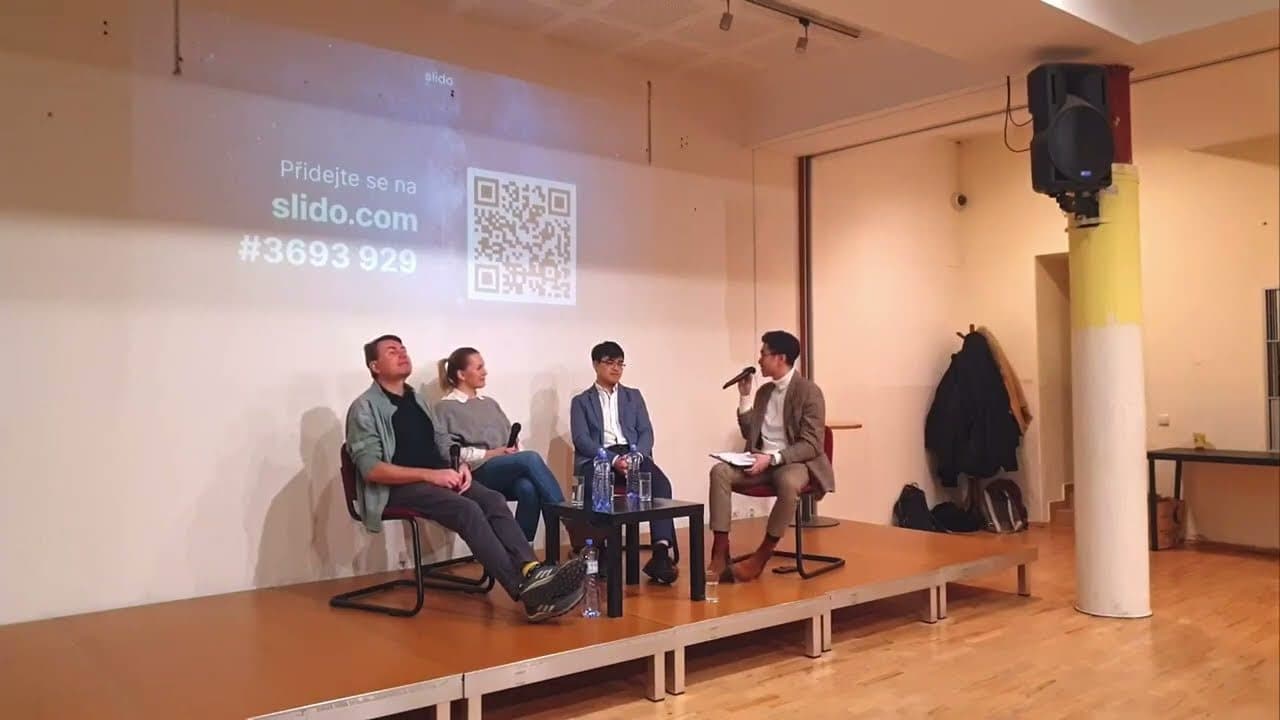
Moderator Tu Anh “Kiki” Vo from TAMly talks with psychiatrist and neuroscientist Natálie Böhmová, psychologist Helena Halířová and nutrition adviser Denisa Olšavská. The recording has captions in Czech, Vietnamese and English.
Editing: Linda (TAMly), sound and technology: Lukáš (Vietcast). In cooperation with VietUp.
What it covers
What ADHD is – and what it is not
The discussion starts from what we usually imagine ADHD to be and what it really is. The guests then go through the most common myths: whether only boys have ADHD, whether it is laziness, whether it is caused by upbringing and what lies behind the phrase “everyone has ADHD these days”.
A separate chapter is devoted to ADHD and life between two worlds. The introduction also mentions a review suggesting that ADHD is underdiagnosed in Asian American children and adolescents – partly because of stigma and the “model minority” myth.
Signs and the ADHD brain
The next part looks at how a person might recognise that they could have ADHD, what its signs are and what emotional dysregulation means. The panel explains how the ADHD brain works and also talks about hyperfocus and its advantages.
Assessment and women with ADHD
The guests describe how ADHD assessment works and raise the question of whether a person needs an official diagnosis at all. Plenty of time goes to why assessment is more complicated for women.
They also talk about ADHD in connection with hormones and the menstrual cycle, motherhood and other life changes, and “hyperfocus on motherhood”.
Everyday life, work and study
The practical part starts with how ADHD affects everyday life and offers tips on tidying, handling chaos and simplifying your surroundings. ADHD at work and in the workplace follows.
The panel also covers studying, getting “stuck” and what to do when you do.
Sport, food and closing reflections
The final chapters cover sport and food in relation to ADHD, and how ADHD relates to other psychological difficulties. The discussion ends with a shared reflection and a summary of what participants take away.
The evening aimed to give a clearer understanding of ADHD, practical strategies for working with attention and regulation – not only for people with ADHD – and the reassurance that nobody is alone in this.
Tips for you
You can answer the questions anonymously. Answers appear once the TAMly team has checked them.
If you recognise signs of ADHD in yourself, treat it as a reason to talk to a professional, such as a psychiatrist or clinical psychologist – not as a finished diagnosis.
Simplify your surroundings: fewer things in sight, fixed places for items you often look for, and visible reminders.
Break big tasks into small steps and start with the smallest. When you get stuck, a change of place, a bit of movement or asking for help may help.
Movement, regular meals and sleep are not treatment, but they can make daily life easier. Discuss bigger changes to your diet with a professional.
Talk about what you are going through with people you trust. Many people know the feeling of being “lazy” or “different” – you are not alone.
You can find information about mental health and where to get help on the Nevypusť duši website, and verified services near you on the Opatruj se map.
Sharing guidelines
- Anonymously – no names or personal details.
- With respect – no insults, hate or attacks on others.
- Speak for yourself – your own experience and views.
- We protect privacy – do not share sensitive details about other people.
Sources and further reading
- Faraone, S. V., Banaschewski, T., Coghill, D., Zheng, Y., Biederman, J., Bellgrove, M. A., et al. (2021). The World Federation of ADHD International Consensus Statement: 208 evidence-based conclusions about the disorder. Neuroscience & Biobehavioral Reviews, 128, 789–818. doi.org ↗
- Kooij, J. J. S., Bijlenga, D., Salerno, L., Jaeschke, R., Bitter, I., Balázs, J., et al. (2019). Updated European Consensus Statement on diagnosis and treatment of adult ADHD. European Psychiatry, 56(1), 14–34. doi.org ↗
- Song, P., Zha, M., Yang, Q., Zhang, Y., Li, X., & Rudan, I. (2021). The prevalence of adult attention-deficit hyperactivity disorder: A global systematic review and meta-analysis. Journal of Global Health, 11, 04009. doi.org ↗
- Young, S., Adamo, N., Ásgeirsdóttir, B. B., Branney, P., Beckett, M., Colley, W., et al. (2020). Females with ADHD: An expert consensus statement taking a lifespan approach providing guidance for the identification and treatment of attention-deficit/hyperactivity disorder in girls and women. BMC Psychiatry, 20, 404. doi.org ↗
- Theiner, P. (2012). ADHD od dětství do dospělosti. Psychiatrie pro praxi, 13(4), 148–151. www.psychiatriepropraxi.cz ↗
- National Institute for Health and Care Excellence. (2018, updated 2019). Attention deficit hyperactivity disorder: Diagnosis and management (NICE Guideline NG87). www.nice.org.uk ↗
- Feng, A., O’Neill, S., & Rostain, A. L. (2024). Contributors to underdiagnosis of ADHD among Asian Americans: A narrative review. Journal of Attention Disorders, 28(12), 1499–1519. doi.org ↗
- Národní ústav duševního zdraví (NUDZ). nudz.cz www.nudz.cz ↗
- Nevypusť duši – duševní zdraví, informace a pomoc. nevypustdusi.cz nevypustdusi.cz ↗
- Opatruj se – mapa péče o duševní zdraví. opatruj.se www.opatruj.se ↗
How did you like this content?
★ 5.0 of 5 · 1 rating
Read next
Elea: The diagnosis was a huge relief
Elea, Tu Anh (Kiki), Veronika Ngo
Elea, an ambassador of the Muôn Màu project, only learned about her ADHD as an adult. She talks about a childhood full of intense emotions, about school days that started at seven in the morning to catch up on work, and about why the diagnosis meant understanding rather than a label.
Mental health of Vietnamese people in Czechia
Minh Mai, Mgr. Jan Kulhánek, Dominika Čechová, M. A., Mgr. Le Hong Thai
A psychotherapist, a psychiatrist and a clinical psychologist on where to turn for help and how pressure to perform and the migration experience affect Vietnamese families in Czechia.
Mental health: success, family and wellbeing
Dan Le, Dominika Čechová, M. A.
A conversation with psychotherapist Dominika Čechová about what shapes us: childhood, emotions, relationships, pressure to perform and psychotherapy.