Community story
Elea: The diagnosis was a huge relief
“I stopped asking why I am the way I am, and started looking for what my brain needs and how to be kinder to myself.”
6 min · Text: Tu Anh (Kiki) · Illustrations: Veronika Ngo
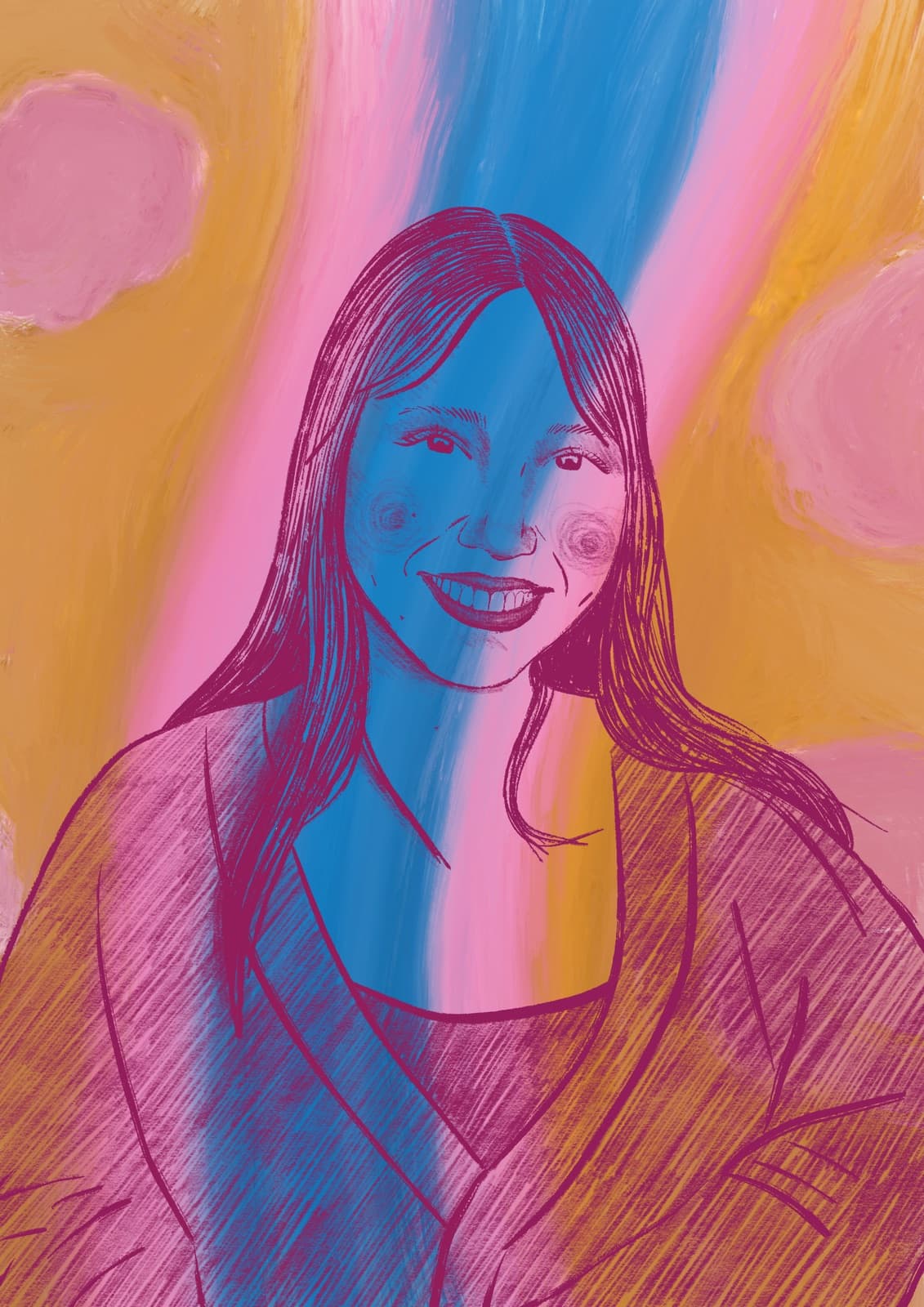
Elea is an ambassador of the Muôn Màu project. She was diagnosed with ADHD only as an adult, after years of looking capable on the outside while feeling exhausted inside. She shares her story so that others can recognise themselves in it – and not be afraid to look for answers.
Childhood
As a child I was incredibly curious, forgetful and restless. I felt emotions very intensely. When someone was kind to me, I remembered it for a very long time. When someone laughed at me, it stayed with me for years.
I got excited easily, but lost interest just as easily. When things did not move quickly, I got frustrated. My family thought I was just too sensitive and impatient.
School
At school I had to spend an enormous amount of energy just on not disturbing anyone and not forgetting anything. At secondary school the demands grew; from the outside I looked like a normal student, but inside I felt I was constantly chasing a train that had already left. I used to come to school at seven in the morning, when the caretaker opened up, to catch up on overdue work.
I thought procrastination meant I did not care. But I cared a lot. Sometimes I cared about something so much that I could not even start. I was not running away from the work. I was running away from the feeling of being overwhelmed.
Still, I learned to come across as capable. People only see the result, not the chaos behind it.
Adulthood and diagnosis
This cycle carried on into adulthood, when I worked as an English teacher.
I was good at anticipating other people’s needs, but inside I was constantly exhausted. I suspected I might have ADHD, but I did not want to admit it.
The turning point came when I later read an article by a woman with ADHD in which I recognised myself completely. At the psychiatrist’s I still had doubts and told myself I was exaggerating, but in the end I passed the assessment with flying colours.
The diagnosis was a huge relief. I stopped asking why I am the way I am, and started looking for what my brain needs and how to be kinder to myself.
Today
Today I work as an executive assistant, and I am finding that ADHD helps me in many ways – I am good in a crisis, I solve problems quickly, I notice details and I can read situations and people’s moods well. Although I still struggle with time blindness, routines and starting even simple tasks, I have learned to work with it.
To people who recognise themselves in this, I would say: do not be afraid to look for answers. The greatest relief is not the diagnosis itself, but finally understanding yourself.
What is ADHD?
ADHD (Attention Deficit Hyperactivity Disorder) is a neurodevelopmental difference arising from the different development and functioning of some areas of the brain – especially the networks responsible for attention, motivation, planning and self-control. The International Classification of Diseases (ICD-11) lists it among neurodevelopmental disorders.
According to ICD-11, the typical features are:
- inattention
- hyperactivity
- impulsivity
It is a very variable condition and can look different in everyone. Symptoms must, however, last at least 6 months and be traceable back to childhood.
Around 5–8% of children have ADHD; in adults, prevalence is estimated at 2.5–4%. In childhood the diagnosis is made far more often in boys (roughly 3:1), partly because in girls the symptoms tend to be milder and less visible, or inattention dominates without physical restlessness. In adulthood the ratio evens out considerably (about 1.5:1).
ADHD cannot be “cured”. It is a condition people can learn to work with effectively – through psychotherapy, medication and adjustments to their environment. If you recognise yourself in this description, talk to a GP, a psychiatrist or a clinical psychologist. Online tests cannot replace a diagnosis.
About the Muôn Màu project
Muôn Màu – “a thousand colours” – explores mental health and neurodivergence in the Vietnamese community in Czechia. Through personal stories, art and community gatherings we help break down the stigma around mental health problems and make room for sharing.
Building on earlier TAMly activities, we want to create a safe space for making and self-expression – a place where art lets us talk about what we are going through, what shaped us and what usually stays hidden. Because sometimes words are not enough, and colour, an image or the act of making itself can say what is hard to put into words.
In the project we:
- create together with participants and ambassadors
- capture personal stories and experiences
- talk openly about neurodivergence and mental health
- connect art, dialogue and community
- prepare an exhibition, workshops and other educational outputs
The project was launched on 6 October 2026 at the Skautský institut in Prague. The team is Kiki, Veronika, Anna, Eli, Linda and Nhi. Muôn Màu is a solidarity project supported by the European Solidarity Corps and co-funded by the European Union.
Questions to reflect on
You can answer the questions anonymously. Answers appear once the TAMly team has checked them.
Do you recognise yourself in any part of Elea’s story? Which one?
What helps you when a task overwhelms you before you have even started?
Who around you could you talk to about how you feel?
If you suspect you have ADHD, talk to a GP, a psychiatrist or a clinical psychologist. An online test cannot replace a diagnosis.
Sharing guidelines
- Anonymously – no names or personal details.
- With respect – no insults, hate or attacks on others.
- Speak for yourself – your own experience and views.
- We protect privacy – do not share sensitive details about other people.
Sources and further reading
- Theiner, P. (2012). ADHD od dětství do dospělosti. Psychiatrie pro praxi, 13(4), 148–151. www.psychiatriepropraxi.cz ↗
- ÚZIS ČR. (2026). 10. revize Mezinárodní klasifikace nemocí (MKN-10). www.uzis.cz ↗
- ÚZIS ČR. (2026). 11. revize Mezinárodní klasifikace nemocí (MKN-11). www.uzis.cz ↗
About the project
Muôn Màu 2026
A project connecting art, personal stories and awareness of mental health and neurodivergence in the Vietnamese community. It creates room for self-expression, sharing and mutual understanding.
Learn more about the projectHow did you like this content?
★ 5.0 of 5 · 1 rating
Read next
ADHD in adults
Tu Anh „Kiki“ Vo, MUDr. Natálie Böhmová, Mgr. Helena Halířová, Denisa Olšavská
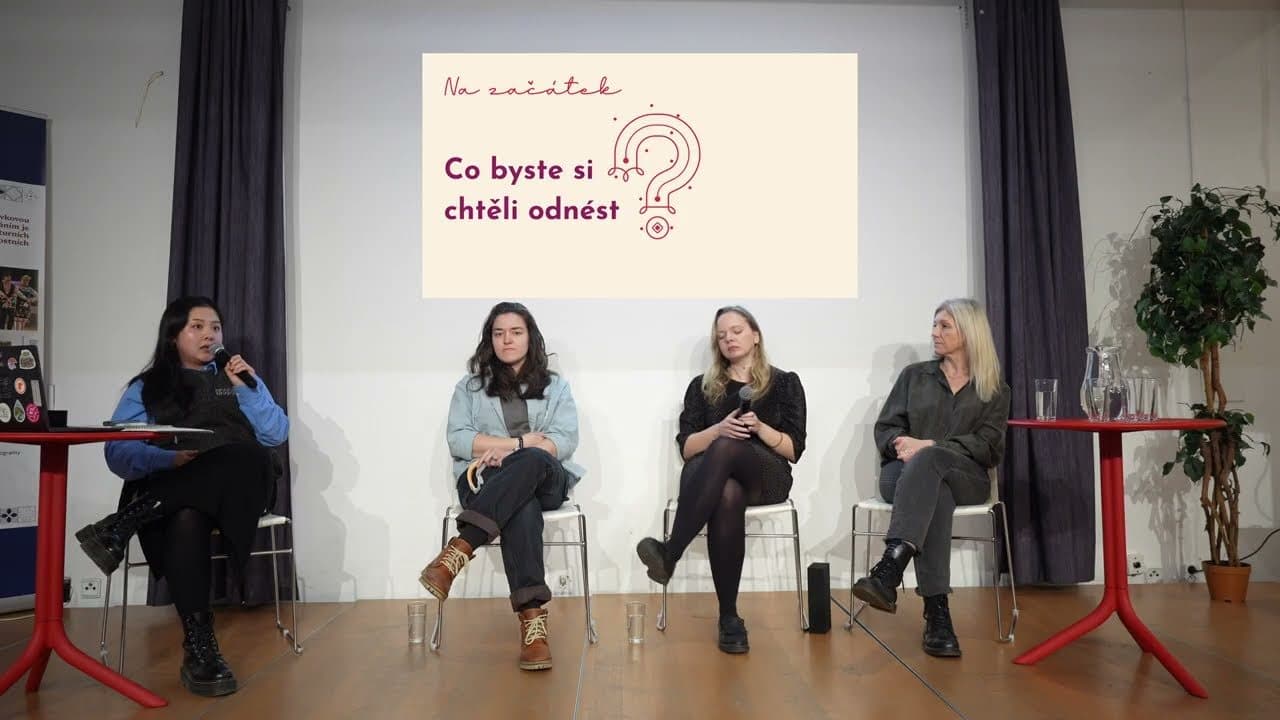
A panel discussion on what ADHD really is, how adults are assessed and which tools can help with attention and regulation.