
Panel discussion recording
Mental health of Vietnamese people in Czechia
Psychologist, psychotherapist, psychiatrist: who to turn to and how to talk about mental health in the family
Recorded on 25 January 2024, House of National Minorities (Dům národnostních menšin), Prague
In short
- Who is who: psychologists and psychotherapists work mainly through conversation, while a psychiatrist is a medical doctor. The panel explains who to turn to in cases of burnout, addiction, suspected ADHD or serious psychological difficulties.
- Mental health does not mean feeling fine all the time. The experts also talk about what we can do for it in everyday life – sleep, movement, contact with people and rest are the basics, not a luxury.
- When safety is at stake: part of the debate covers what to do when a child self-harms or talks about suicide. In immediate danger, call 155 or 112; children and young people up to 26 can call Linka bezpečí on 116 111, and adults the Psychological First Aid Line (Linka první psychické pomoci) on 116 123.
- The panel explains why it is important to distinguish between ordinary thoughts and voices that tell a person to do something, and discusses psychotic difficulties through examples. Such situations belong in the hands of professionals.
- Pressure to perform and parents’ expectations: the debate shows how they affect young Czech Vietnamese and how to find your own path without cutting ties with family. It also asks why people sometimes hide therapy, medication or their sexual orientation from their parents.
- Migration and generations: the migration experience, the language barrier and parents’ trauma affect relationships between generations. The panel covers misunderstanding between generations, guilt, searching for your own identity, and why talking openly about mental health is often hard in the Vietnamese community in Czechia.
- Through concrete life situations and audience questions, the experts show what help can look like for burnout, alcohol problems, family conflict or long-term pressure from parents.
- Help even without money for therapy: the panel discusses the options for people who cannot afford paid therapy. You can ask about services covered by health insurance, crisis centres or non-profit counselling services; the Opatruj se map and the Nevypusť duši website offer an overview.
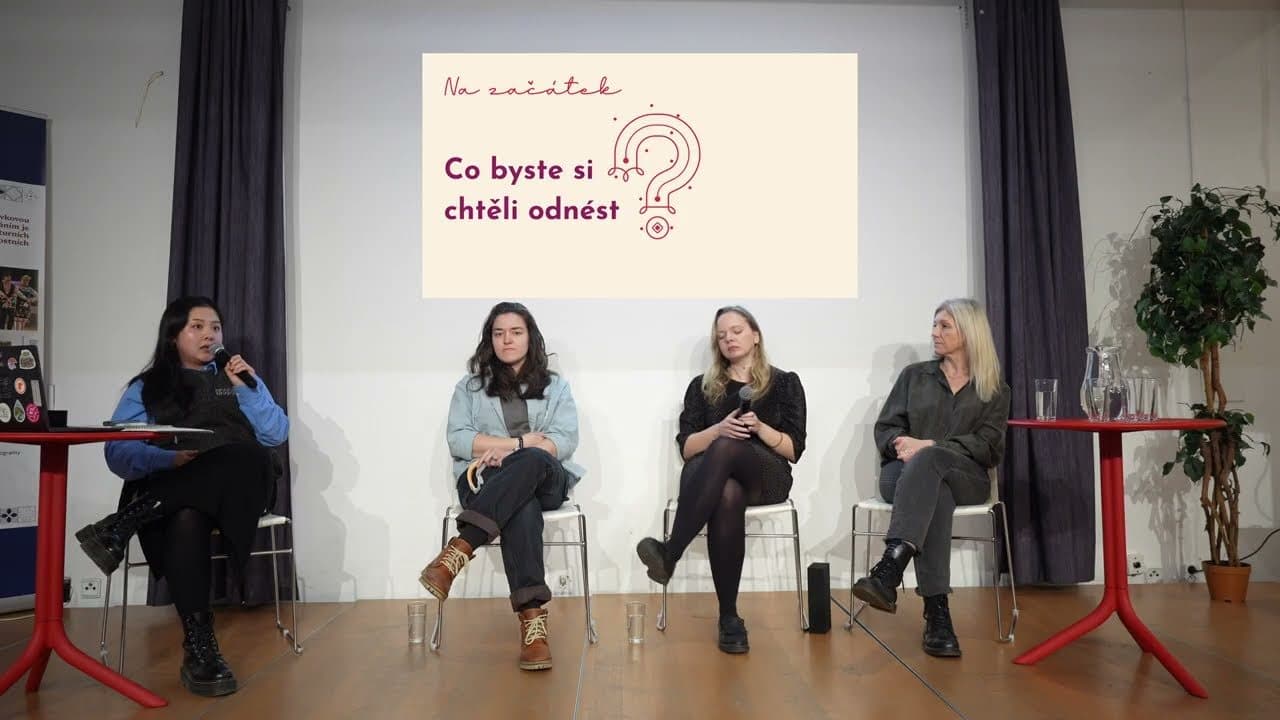
In this panel discussion, psychotherapist Dominika Čechová, psychiatrist Le Hong Thai and clinical psychologist and psychotherapist Jan Kulhánek share their professional experience. Moderated by Minh Mai.
The debate includes concrete life situations and questions from the audience. It also touches on sensitive topics such as self-harm and suicide. If these are difficult for you right now, watch the recording at a time when you have support; contacts for help are in the tips below.
What it covers
Who is who and who to turn to
The discussion starts with the difference between a psychologist, a psychotherapist and a psychiatrist, and what mental health actually means – and why it does not mean feeling fine all the time.
The experts then discuss who to turn to in cases of burnout, addiction, suspected ADHD or serious psychological difficulties.
When safety is at stake
Part of the debate covers what to do when a child self-harms or talks about suicide, and why it is important to distinguish between ordinary thoughts and voices that tell a person to do something. Psychotic difficulties are also discussed through examples.
Such situations belong in the hands of professionals. Crisis contacts are listed in the tips below.
Pressure to perform and relationships with parents
A significant part of the discussion is about how pressure to perform and parents’ expectations affect young Czech Vietnamese. It covers finding your own path without having to cut ties with family.
It also asks why people sometimes hide therapy, medication or their sexual orientation from their parents.
Migration, language and generations
The discussion looks at how the migration experience, the language barrier and parents’ trauma affect relationships between generations. It covers misunderstanding between generations, guilt, pressure to succeed, searching for your own identity, and why talking openly about mental health is often hard in the Vietnamese community in Czechia.
Help even without money for therapy
The experts discuss what help is available if someone cannot afford paid therapy, and what we can do for our mental health in everyday life.
Through audience questions they show what help can look like for burnout, alcohol problems, family conflict or long-term pressure from parents.
Tips for you
You can answer the questions anonymously. Answers appear once the TAMly team has checked them.
If you or someone close to you is in immediate danger, call 155 or 112. Children and young people up to 26 can call Linka bezpečí on 116 111; adults can call the Psychological First Aid Line (Linka první psychické pomoci) on 116 123.
When a child or someone close to you talks about self-harm or suicide, take it seriously, listen without judging and seek professional help. You do not have to handle it alone.
Not sure where to go? Psychologists and psychotherapists work mainly through conversation; a psychiatrist is a medical doctor. A first step can also be your GP, the Nevypusť duši website or the Opatruj se map.
If you cannot afford paid therapy, ask about services covered by health insurance, crisis centres or non-profit counselling services. The Opatruj se map offers an overview.
You can find your own path without cutting ties with your family. A conversation at a calm moment, in a language both sides understand, or with the support of a third person, can help.
Look after yourself on ordinary days too: sleep, movement, contact with people and moments of rest are the basics, not a luxury.
Sharing guidelines
- Anonymously – no names or personal details.
- With respect – no insults, hate or attacks on others.
- Speak for yourself – your own experience and views.
- We protect privacy – do not share sensitive details about other people.
Sources and further reading
- Tuturea, L. E., Hahn, E., Mavituna, S., Eillinghoff, L., Do, T. L., Böge, K., & Ta, T. M. T. (2023). Cultural immersion, acculturation strategies, and depressive symptoms among first-generation Vietnamese migrants in Germany. International Journal of Social Psychiatry, 69(8), 2048–2058. doi.org ↗
- Wolf, S., Hahn, E., Dettling, M., Nguyen, M. H., Wingenfeld, K., Stingl, M., Hanewald, B., & Ta, T. M. T. (2017). Migration-related stressors and their effect on the severity level and symptom pattern of depression among Vietnamese in Germany. Depression Research and Treatment, 2017, 8930432. doi.org ↗
- van der Ham, L., Wright, P., Van, T. V., Doan, V. D. K., & Broerse, J. E. W. (2011). Perceptions of mental health and help-seeking behavior in an urban community in Vietnam: An explorative study. Community Mental Health Journal, 47(5), 574–582. doi.org ↗
- Niemi, M., Thanh, H. T., Tuan, T., & Falkenberg, T. (2010). Mental health priorities in Vietnam: A mixed-methods analysis. BMC Health Services Research, 10, 257. doi.org ↗
- Kirmayer, L. J., Narasiah, L., Munoz, M., Rashid, M., Ryder, A. G., Guzder, J., Hassan, G., Rousseau, C., & Pottie, K. (2011). Common mental health problems in immigrants and refugees: General approach in primary care. CMAJ, 183(12), E959–E967. doi.org ↗
- Linka bezpečí – 116 111. linkabezpeci.cz www.linkabezpeci.cz ↗
- Nevypusť duši – duševní zdraví, informace a pomoc. nevypustdusi.cz nevypustdusi.cz ↗
- Opatruj se – mapa péče o duševní zdraví. opatruj.se www.opatruj.se ↗
- Národní ústav duševního zdraví (NUDZ). nudz.cz www.nudz.cz ↗
How did you like this content?
No ratings yet. Be the first to rate it.
Read next
ADHD in adults
Tu Anh „Kiki“ Vo, MUDr. Natálie Böhmová, Mgr. Helena Halířová, Denisa Olšavská
A panel discussion on what ADHD really is, how adults are assessed and which tools can help with attention and regulation.
Mental health: success, family and wellbeing
Dan Le, Dominika Čechová, M. A.
A conversation with psychotherapist Dominika Čechová about what shapes us: childhood, emotions, relationships, pressure to perform and psychotherapy.