Panel discussion recording
The position of women in Vietnamese society
Tradition, expectations and women’s strength
1 h 46 min · Recorded on 18 April 2026, Vnitroblock Prague, side programme to The Ceramic Heart exhibition
In short
- The discussion asks how the role of women is changing within Vietnamese society, what tradition means to us and where we define our own path. It is a conversation about identity, expectations and women’s strength.
- The conversation is moderated by Trang Do, an influencer and author of the autobiographical book Asiatka v Česku. Very different experiences and perspectives meet at one table.
- Influencer and creator Chili Ta brings a view of the modern female role.
- Court interpreter and translator Julie Lien Vrbová studied and researched the cognitive linguistics of Vietnamese in Hanoi from 2011 to 2017. She also works on the Vietnamese diaspora in Europe and modern literature.
- Linguist Ondra Slowik, a specialist in Vietnamese culture, also brings a personal perspective through the life story of his wife, who grew up in a Vietnamese orphanage.
- The discussion was a side programme to The Ceramic Heart (Keramické srdce) exhibition by comic artist Bao Quyen and ceramicist and product designer Veronika Le. Pairing the exhibition with a conversation shows that identity and women’s experience can be explored through words as well as art.
- Something to reflect on: which expectations do you place on yourself and which come from outside – from family, people around you or social media? Tradition does not have to be all or nothing; you can choose what you want to carry on.
- If the pressure of expectations wears you out over time, it is fine to seek support. The Nevypusť duši website offers an overview of information and help.
How is the role of women changing within Vietnamese society? What does tradition mean to us, and where do we define our own path?
Moderated by Trang Do, author of the autobiographical book Asiatka v Česku (An Asian woman in Czechia). The panel features creator Chili Ta, interpreter and translator Julie Lien Vrbová and linguist Ondra Slowik.
The discussion took place as a side programme to The Ceramic Heart exhibition by comic artist Bao Quyen and ceramicist and product designer Veronika Le.
What it covers
What the discussion is about
The panel asks how the role of women is changing within Vietnamese society, what tradition means to us and where we define our own path. It is a conversation about identity, expectations and women’s strength.
Different perspectives at one table
Moderator Trang Do is an influencer and author of the autobiographical book Asiatka v Česku. Chili Ta brings a creator’s view of the modern female role. Julie Lien Vrbová studied and researched the cognitive linguistics of Vietnamese in Hanoi from 2011 to 2017 and also works on the Vietnamese diaspora in Europe and modern literature.
Linguist Ondra Slowik, a specialist in Vietnamese culture, also brings a personal perspective through the life story of his wife, who grew up in a Vietnamese orphanage.
Connection to The Ceramic Heart exhibition
The discussion was a side programme to The Ceramic Heart exhibition (the Keramické srdce concept) at Vnitroblock. The exhibition is by comic artist Bao Quyen and ceramicist and product designer Veronika Le.
Pairing the exhibition with a conversation shows that identity and women’s experience can be explored through words as well as art.
Tips for you
You can answer the questions anonymously. Answers appear once the TAMly team has checked them.
Ask the women in your family – your mum, grandmother, aunts – what their life looked like at your age. Their stories can show how expectations change.
Tradition does not have to be all or nothing. You can choose what you want to carry on and talk calmly about the rest.
Notice which expectations you place on yourself and which come from outside – from family, people around you or social media.
If the pressure of expectations wears you out over time, it is fine to seek support. The Nevypusť duši website offers an overview of information and help.
Sharing guidelines
- Anonymously – no names or personal details.
- With respect – no insults, hate or attacks on others.
- Speak for yourself – your own experience and views.
- We protect privacy – do not share sensitive details about other people.
Sources and further reading
- Do, T. (2025). Asijatka v Česku. Argo. www.knihydobrovsky.cz ↗
- Drummond, L., & Rydstrøm, H. (Eds.). (2004). Gender practices in contemporary Vietnam. Singapore University Press. nuspress.nus.edu.sg ↗
- Vo, V. D. (2026). A constructive engagement with Confucian gender ethics: Reinterpreting the Three Obediences and Four Virtues in contemporary Vietnam. Comparative Philosophy, 17(2). doi.org ↗
- Rydstrøm, H. (2017). A zone of exception: Gendered violences of family ‘happiness’ in Vietnam. Gender, Place & Culture, 24(7), 1051–1070. doi.org ↗
- Hüwelmeier, G. (2013). Bazaar pagodas – Transnational religion, postsocialist marketplaces and Vietnamese migrant women in Berlin. Religion and Gender, 3(1), 76–89. doi.org ↗
- Souralová, A. (2015). Paid caregiving in the gendered life course: A study of Czech nannies in Vietnamese immigrant families. Czech Sociological Review, 51(6), 959–992. doi.org ↗
- Nevypusť duši – duševní zdraví, informace a pomoc. nevypustdusi.cz nevypustdusi.cz ↗
About the project
Muôn Màu 2026
A project connecting art, personal stories and awareness of mental health and neurodivergence in the Vietnamese community. It creates room for self-expression, sharing and mutual understanding.
Learn more about the projectHow did you like this content?
★ 5.0 of 5 · 1 rating
Read next
The Ceramic Heart: self-love, comparison and silence in the Vietnamese community
Bao Nhi
“You’ve put on weight.” “Why can’t you be like Mrs X’s daughter?” Why criticism, comparison and remarks about the body are so common in Vietnamese families, what they do to self-worth and why nobody talks about them. The article follows the exhibition and podcast The Ceramic Heart.
Bao Quyen: How do you build a heart? On the exhibition The Ceramic Heart
Bao Nhi, Bao Quyen „Niky“
The pilot episode of the podcast Příběhy mezi kulturami (Stories between cultures). Illustrator Bao Quyen “Niky” talks about the exhibition and comic The Ceramic Heart, about self-love, self-worth, pressure about appearance and the deep marks other people’s words can leave in us.
Mixed marriages in the Vietnamese community
Dan Le, Veronika Ngo, Dana Haranzová
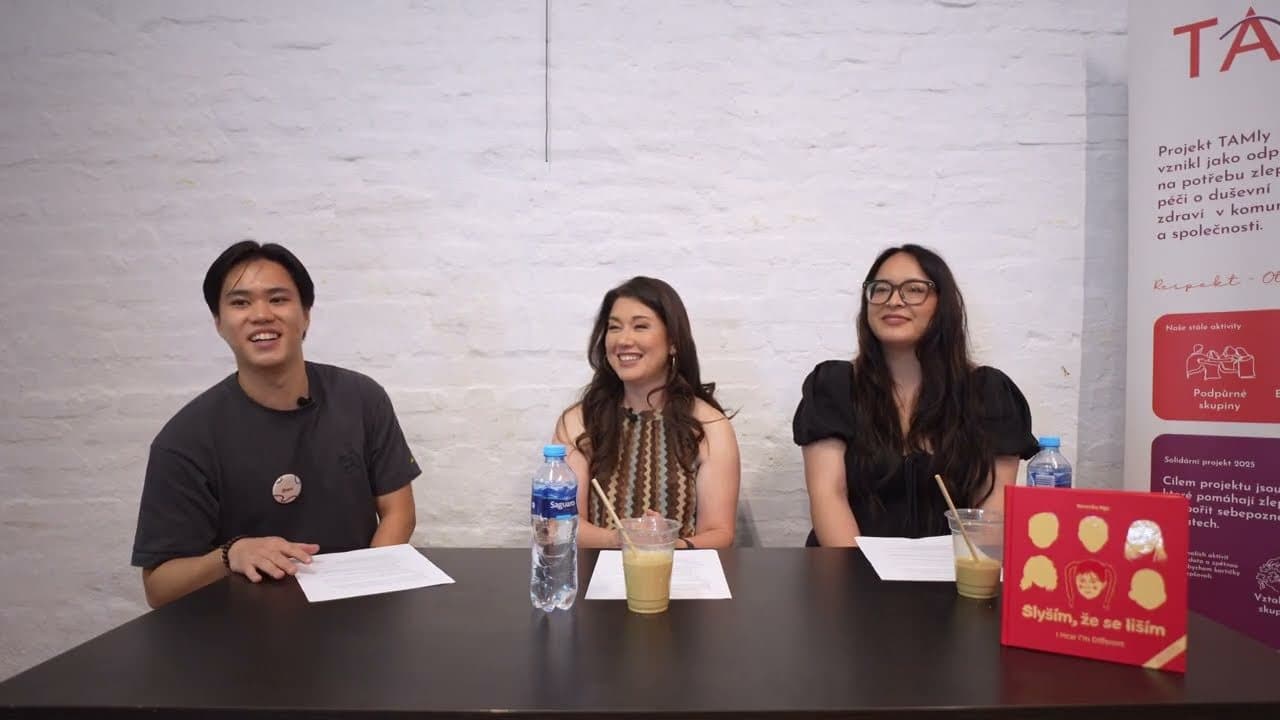
Veronika Ngo and Dana Haranzová share personal stories about growing up between two cultures, searching for identity and feeling accepted.